
If you’d like to download a PDF version of this blog post to email to members of your community, just enter your name and email below, and we’ll send it to you.
Stories are one of the first ways we learn how the world works. Long before we can explain what we believe, we are forming ideas about who belongs, whose lives matter, and what love looks like.
That’s why picture books are so important. They are some of the first stories children encounter, which means they’re never “just” stories. Through colors, shapes, words, and emotions, they quietly shape our imaginations and our understanding of faith.

When we pause to notice the stories shaping our children’s imaginations, we’re invited to ask which stories we’ve been taught to notice—and which ones we haven’t.
For many adults—especially white parents, caregivers, and church leaders—Black History Month can bring uncertainty. What do we say to kids? What if we say the wrong thing? Where do we begin?
It can feel uncomfortable to talk about stories and systems we’ve been taught to ignore, but that makes it all the more important. This is why, as a white person, I approach Black History Month not as an expert, but as a learner. And, as with everything, the first place I go when I want to learn something new is the picture book section of my library.
Further reading: Picture Books Aren’t Just for Kids
With their blend of story and illustration, picture books invite us to approach learning with curiosity and delight, offering mirrors, windows, and sliding glass doors into the expansive kaleidoscope of the human experience.

Why Picture Books Matter for Faith Formation
Picture books also introduce us to God. From the storybook Bibles we read, to the library books we borrow, children osmotically absorb ideas about who God notices, how justice shows up, and what kind of world is possible.
When Black stories are missing or only appear as stories of struggle, children absorb that absence. When children encounter Black joy, creativity, leadership, resistance, and everyday life, they are invited into a fuller and more truthful vision of the world God loves.
In this way, reading picture books becomes a spiritual practice for everyone, shaping imagination and forming compassion through stories of courage, community, and care.
Centering Black Voices
If stories shape how children understand God and the world, then it matters whose voices we choose to trust. Honoring Black history is an invitation to move beyond simply reading stories about Black history and pay attention to who is telling the story.
One practice that has shaped my own reading is paying attention to the names on the cover. When I pick up a picture book, I look at who wrote it and who illustrated it. If I’m not familiar with their work, I take a moment to learn more about them. Just as it matters to know that this blog is written by a queer, white person, it matters to know who is shaping the stories we place in children’s hands.
This awareness is especially important because there are many books about Black history written by white authors or illustrated by white artists. That doesn’t automatically make those stories harmful—but it does remind us to be curious about whose voices are centered and whose perspectives may be missing.
More Than February
Black History Month matters. It creates a shared moment to pause, pay attention, and learn. But once we begin noticing whose voices shape the stories we share with children, it becomes clear that this work can’t be contained to a single month.
Picture books invite us into an ongoing practice. These stories belong in regular rotation—on bedtime shelves, in Sunday school classrooms, and in the everyday life of faith communities. Black history is not a separate chapter; it is woven throughout the story of who we are and who God is calling us to become.
Picture Books to Read and Share
Rather than offering a long list, I want to highlight a picture book that beautifully holds faith, mystery, and justice together—and then point you toward voices who can help you keep discovering more.
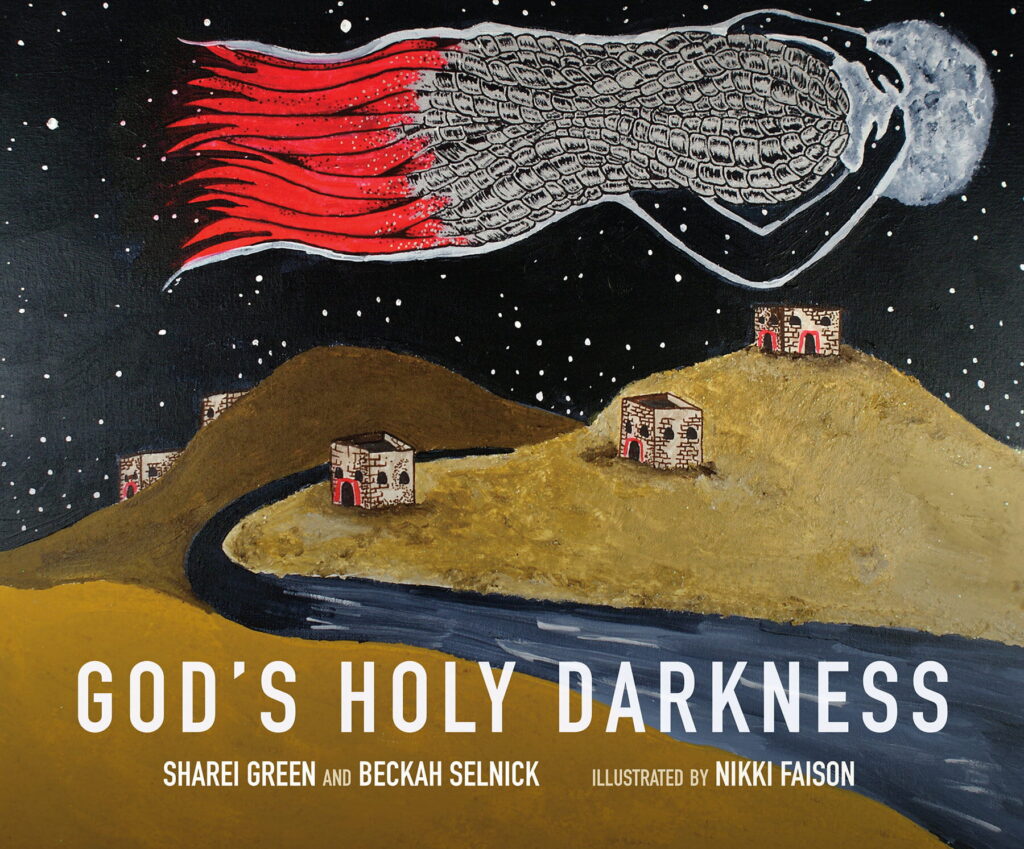
God’s Holy Darkness by Sharei Green and Beckah Selnick, illustrated by Nikki Faison
God’s Holy Darkness invites readers of all ages into a spacious, imaginative understanding of God. Through poetic language and rich illustration, this book resists the idea that God is only found in light or certainty. Instead, it honors mystery, presence, and the holy beauty found in darkness.
Keep Learning: Voices to Follow
No single book or blog post can do this work alone. One of the most faithful practices we can adopt is learning from people who are already doing this work with care, consistency, and wisdom.
These accounts regularly highlight children’s books by Black authors and other creators of color, offering thoughtful recommendations, context, and reflection:
Mychal Threets

A librarian whose joyful advocacy for libraries, belonging, and access makes book-loving contagious. Instagram: @mychal3ts
The Conscious Kid

Thoughtful resources and book recommendations grounded in racial justice and child development. Instagram: @theconsciouskid
We Need Diverse Books

A long-standing movement advocating for diverse representation in children’s literature. Instagram: @weneeddiversebooks
Charnaie Gordon, Here Wee Read

Curated book lists celebrating Black stories, joy, and everyday life. Instagram: @hereweeread
Further Reading:
Leave a Reply