
Faith Expressed Through Creative Resistance
Faith is often framed as something personal or private, something practiced once a week or behind closed doors. Something that shapes our hearts and minds without interrupting or interacting with our everyday lives.
Yet, time and again throughout scripture, faith refuses to stay contained. It flows into city streets, temple courtyards, and communal wells, showing up in the ordinary, public places where life unfolds.
In this series on public faith, we’re exploring what it means to practice faith in the world around us through creativity, community, and courageous action.
What is Craftivism?
I love a good portmanteau, and one that combines crafts and activism? Yes please.
The term craftivism is often attributed to writer and maker Betsy Greer, who began using it publicly in 2003 to give language to something many people were already practicing: using creative work as a form of advocacy and public witness.
Throughout history, communities around the world have used ordinary materials to tell stories, share information, and spark conversation. “Craftivism” gives a modern name to this long-standing practice of turning the work of our hands into public expression.
Craft as Quiet Resistance
Long before the term craftivism existed, communities were using craft as a tool for storytelling and resistance.
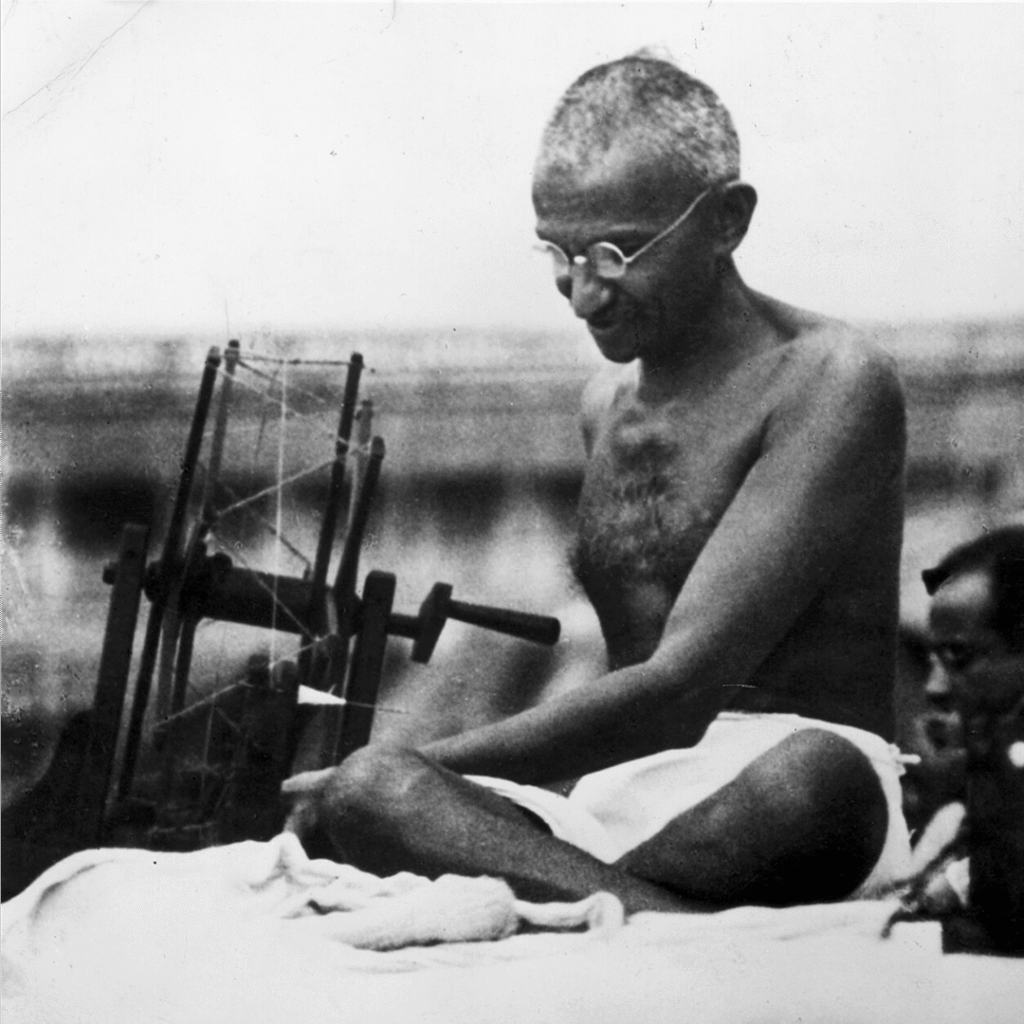
Gandhi’s Spinning Wheel and the Khadi Movement, India
Gandhi encouraged Indians to spin their own cloth as a form of economic resistance to British rule. The spinning wheel became a symbol of unity and self-reliance.
Learn more: Gandhi’s Khadi Movement: Uniting People, Fashion and Freedom
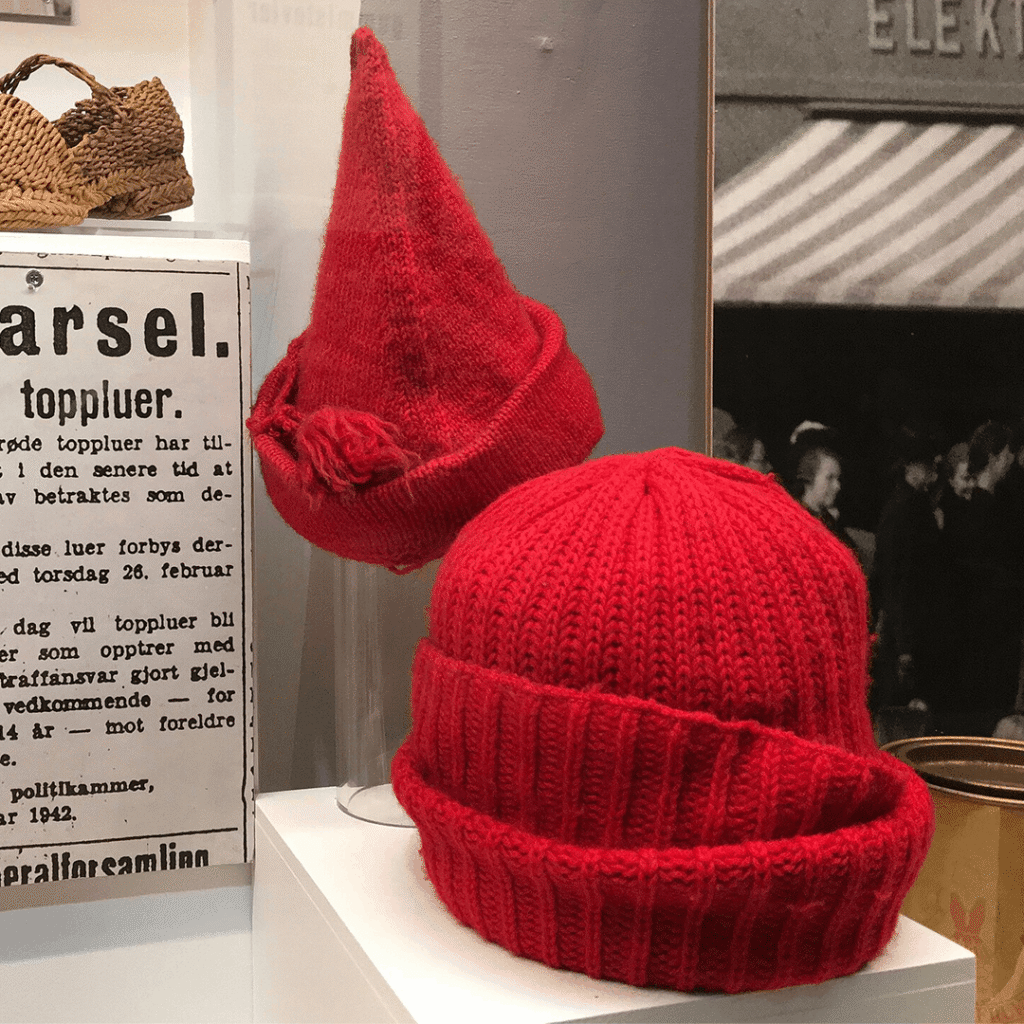
“Nisselue” Red Hats, Norway
During Nazi occupation, red knitted caps became quiet symbols of Norwegian identity and resistance. In 1942, authorities banned them after the hats spread as signs of national unity.
Learn more: The Red Hat Resistance
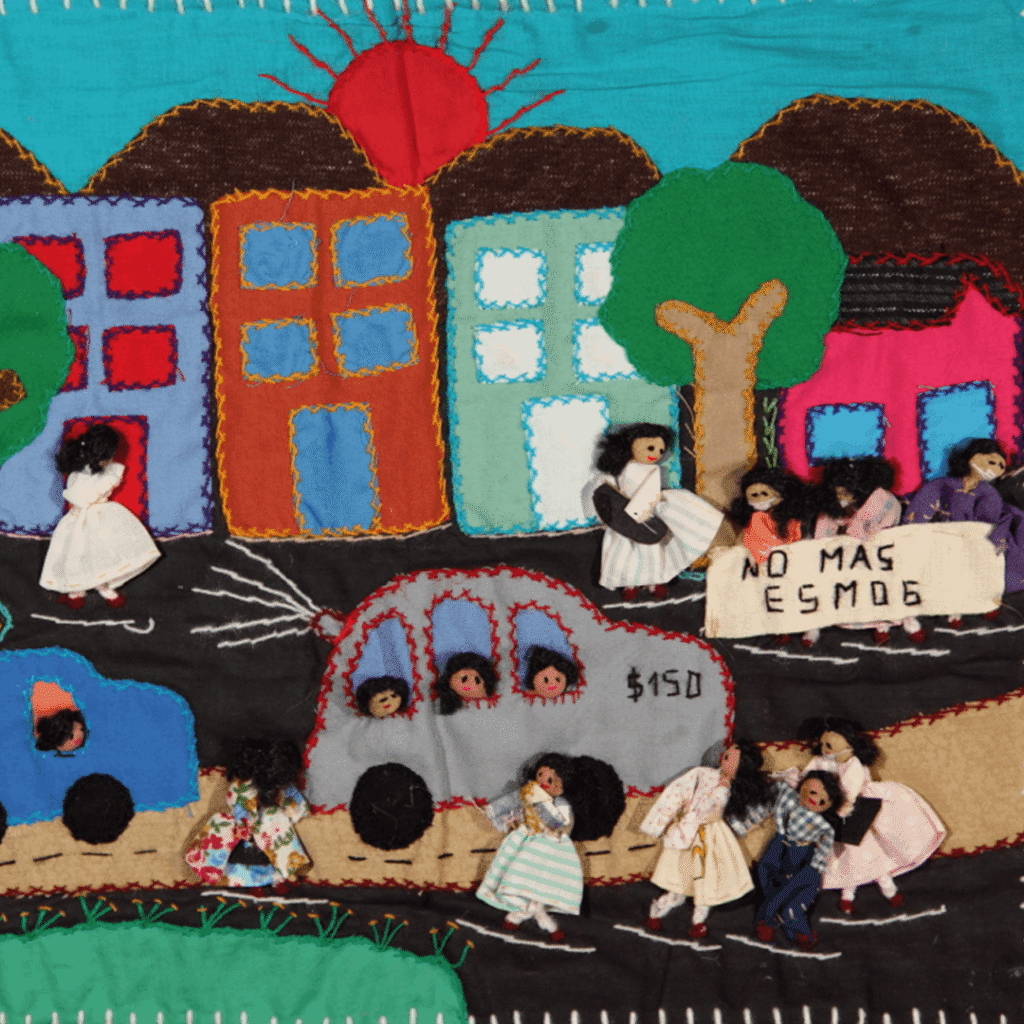
Anonymous maker. Image: Conflict Textiles / CAIN Archive, Ulster University. Cropped.
Arpilleras, Chile
Branded “tapestries of defamation” by the authoritarian regime of Augusto Pinochet, Chilean women stitched arpilleras to document disappearances and state violence.
Learn more: Arte, Mujer y Memoria:
Arpilleras from Chile
The AIDS Memorial Quilt, United States
The AIDS Memorial Quilt names and honors lives lost to HIV/AIDS. What began as remembrance became a powerful public call for visibility, dignity, and action.
Learn more: National AIDS Memorial: The History of the Quilt
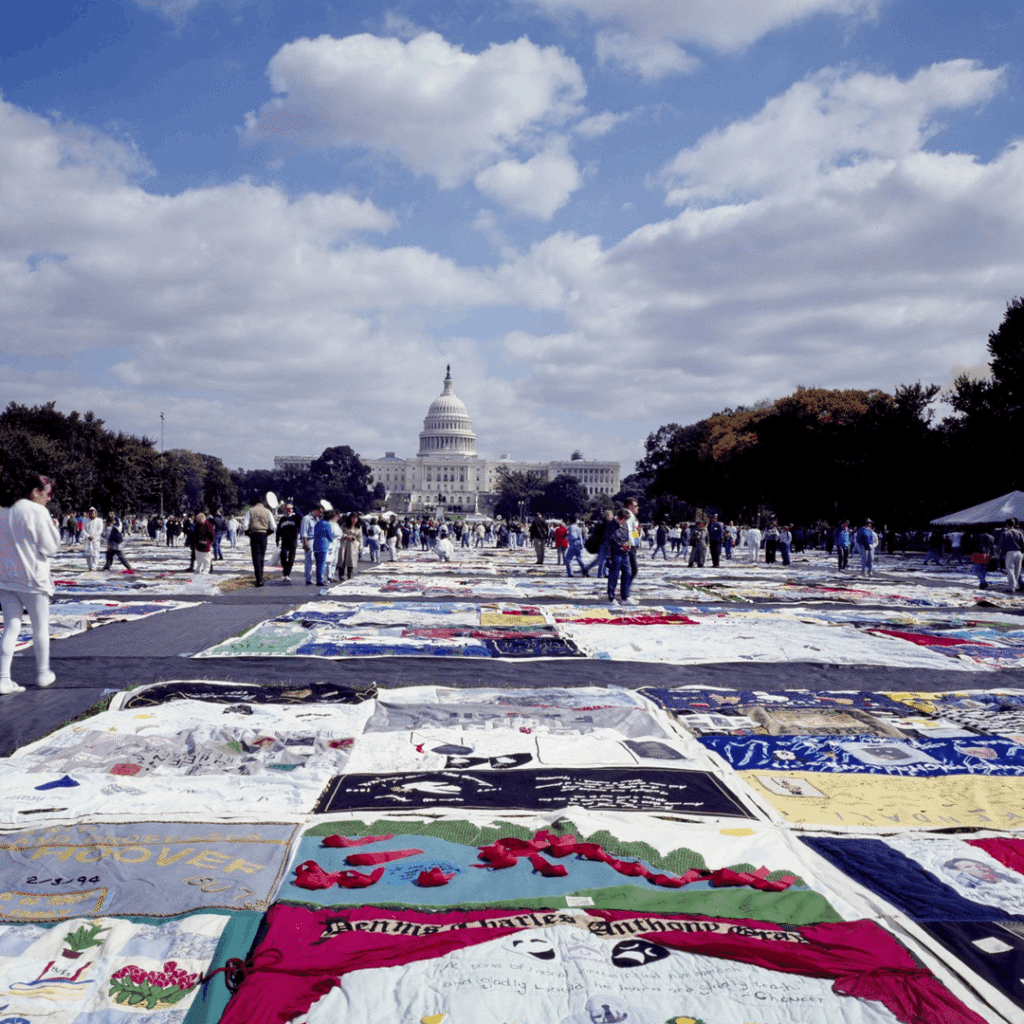
These projects did not rely on spectacle. They relied on persistence. They turned fabric into testimony and collective labor into public witness.
Why Craftivism Matters for Faith Communities
For many people, activism begins with anger. Anger is an important human emotion because it alerts us when something is not right—even Jesus expressed anger in the face of injustice. But anger alone is difficult to sustain, especially on the path of nonviolence.
Crafting offers a kind of pressure valve. It slows the pace, invites reflection, and turns your anger into something that sparks curiosity, connection, and conversation.
For faith communities, this shift matters.
Public life can feel loud, polarized, and overwhelming. Not everyone can safely attend a protest. Not everyone feels called to speak publicly or debate policy. But many of us can gather around a table. We can create, we can reflect, and we can give visible shape to the values we hold.
Craftivism offers a way to participate that feels thoughtful rather than reactive. It allows faith to take visible form in ways that are sustainable and shared.
Practicing Craftivism
Anyone can be a craftivist. Whether you’ve been quilting for decades or just learned your first stitch, there’s room for you around the craft table.
Here are a few things to keep in mind as you begin:
- Take your time: Sustainable change happens slowly, so does crafting. Honor the patience they both require.
- Embrace playfulness: Humor and beauty can open conversations that arguments sometimes cannot. Let your creativity disarm defensiveness.
- Collaborate: Make things together; learn new skills from those around you. Shared labor builds shared commitment.
- Let materials matter: Work with what you have; let the medium reflect your care and intention. Reuse, repurpose, and practice sustainable crafting.
- Gift it: Allow what you create to move outward. Display it publicly or offer it as a sign of solidarity.
None of these practices require perfection, only steady participation. Over time, small creative acts can shape communities, spark conversation, and make faith visible in ordinary ways.
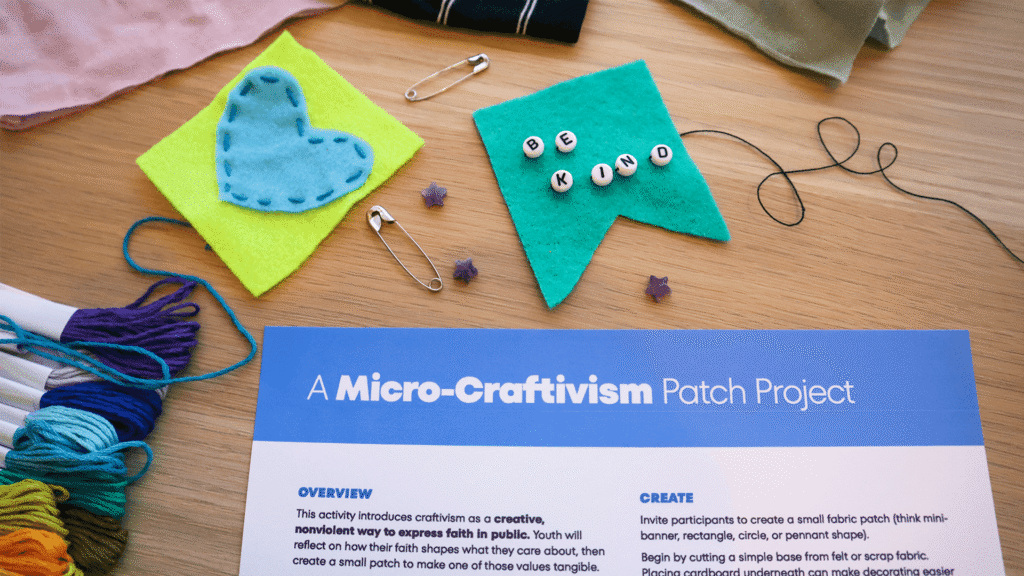
Make Your Own Micro-Craftivism Patches
If you’re ready to explore craftivism in your own community, we’ve created a simple resource to help you begin.
[…] Craftivism: Practicing Public Faith Through Creative Resistance […]