
GUEST WRITER: DEBORAH JODREY
What 1946: A Mistranslation That Shifted Culture Can Teach Us About Reading the Bible
When we think of the Bible, I wonder if we sometimes picture a black, leather-bound book with gold pages floating down from the sky, from God to us. We open it up, find a verse, read the words, and there they are, God’s words, exactly as God intended them!
Except…that’s not really how we got the Bible.
The Bible is a complex collection of texts; a library of books written by dozens of authors in Hebrew, Aramaic, and Greek over hundreds of years, across different cultural and political contexts. We don’t have the original manuscripts. We have copies of copies. The biblical canon itself developed through centuries of debate and discernment.
And then there is translation.
Translation Involves Interpretation
For any of us who have taken a language course in high school or college, whether it be Spanish, French, German, ASL, etc., we know that those languages contain a multitude of phrases that don’t translate perfectly into English, and vice versa. Sometimes the choices we make in translation can change the meaning people take away from a text.
Those translation choices led me, as a Christian educator, to use the documentary 1946: A Mistranslation That Shifted Culture as the basis for a three-part adult education series at my church.
What is the 1946 Documentary?
Released in 2022, this documentary follows researchers who investigate the history of two Greek words, arsenokoitai and malakoi, and their appearances in English Bible translations. The film focuses particularly on the first known use of the word “homosexual” in an English translation of these words in 1946. From there, the researchers ask what happens when translation choices influence the way Christians understand groups of people.
Watch the official trailer for 1946: The Mistranslation That Shifted Culture below.
The film is challenging, emotional, and sometimes difficult to watch. But it also raises much bigger questions about the Bible: How do we know what these ancient texts mean in our language and world today? Who gets to decide how they are translated? What happens when an interpretation becomes embedded in our theology and culture?
Those are huge questions, and they are exactly the kinds of questions people should feel comfortable asking in church.
Before You Press Play
When I decided to use this documentary for an adult education series at my church, I knew that simply watching the film together wouldn’t be enough. Questions about the Bible and identity can bring up deeply held beliefs, personal experiences, painful memories, and strong emotions.
Before You Begin
I recommend establishing community agreements and clarifying the series’ purpose. Studying this documentary is not about winning a theological or biblical debate or having all the “right” answers. It is about creating space to learn, ask questions, listen, and reflect. Know your group, anticipate that difficult emotions may arise, and make sure participants know what they are walking into. This documentary contains content depicting sometimes painful and hurtful interactions between the director, a main character, and the main character’s non-affirming father.
As You Gather
Remember that queer people are probably in the room. A conversation about queer identities is never merely theoretical when queer people are part of our communities. As leaders, we have a responsibility to ensure that people’s identities and sense of belonging are not subjects of debate.
Here is a breakdown of my three-part, one-hour-each series. See the freebie below for goals, discussion questions, resources, and the link to the film’s website, which shaped many of the discussion questions. Feel free to adapt the goals and discussion questions to better fit your context.
Part One: Translation Matters
Before watching the first part of the film, I invited participants to consider what they already knew about biblical translations and how languages and cultural contexts can influence religious beliefs over time.
One funny modern example I shared about the importance of good translation comes from the 90s “Got Milk?” campaign. When “got milk?” was translated literally in Spanish, “¿Tienes Leche?” means “Are you lactating?” Certainly not the point of the original ad! This is one silly example to explain a serious point: translation matters!
The Documentary’s Introduction
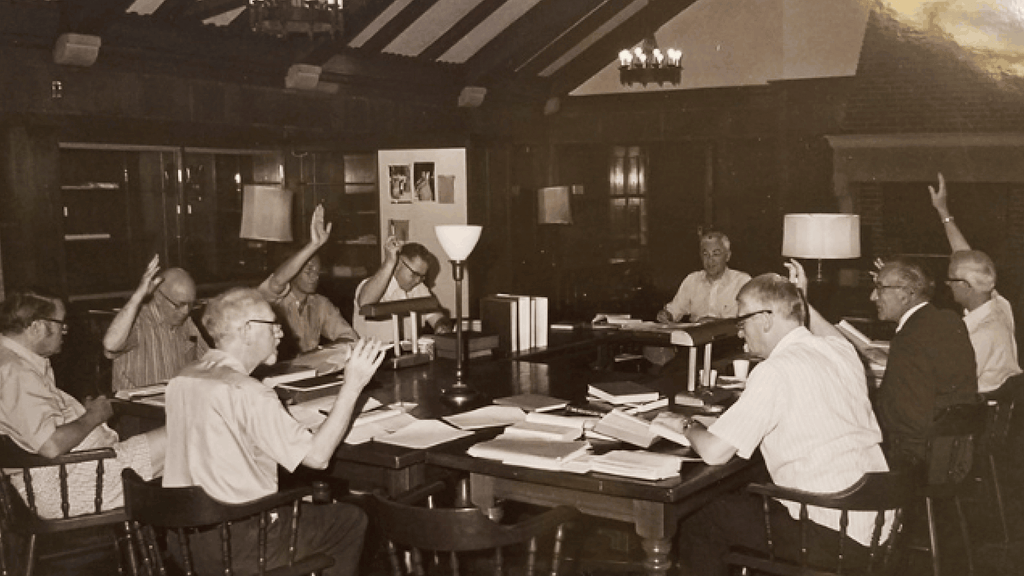
The first section of this film introduces the people at the center of the documentary and begins exploring what happened in 1946. It also introduces the Greek words arsenokoitai and malakoi and raises questions about how these words have been understood and translated over time.
After we watched the first part of the film, we followed up with an open discussion about the emotions the film evoked and whether anyone had experienced the Bible being used to exclude or divide people.
Part Two: The “Clobber” Texts
The second section goes deeper into the history of biblical translation and explores other passages frequently used against queer people, sometimes called the “clobber texts.” The attached handout includes a summary of each text and a list of books and resources to dive even deeper into them.
What is Biblical Literacy?
This section of the film provided an opportunity to discuss something we don’t always explicitly teach in our churches: biblical literacy is about more than knowing what the Bible says. Biblical literacy is learning how to read the Bible.
Literacy starts with asking questions like: Who wrote this? When? Who were they writing to? What was happening politically and culturally during that time? What genre of text is this? What did these words mean in their original context? How have they been translated? What assumptions am I, as a modern reader, bringing to this text?
Then, we have to ask theological questions: What does this text say about God? What problem is it wrestling with? What hope does it offer?
Finally, we acknowledge that we are part of the interpretive process, too. Our identities, experiences, communities, history, and power all shape how we read the Bible (or any text) and make meaning of it.
Whew. That’s a lot. But none of these questions or realities make the Bible less authoritative and impactful within our Christian traditions. For me, it actually makes the Bible more meaningful and more interesting.
The Bible is evidence that throughout human history, we have all struggled to make sense of who we are, why we are here, who God is, why bad things happen, and how we can care for one another. The Bible is full of stories of people wrestling with those same questions. As Christians today, we get to be part of that story too, wrestling with the same questions and continuing that same work.
Part Three: From Information to Transformation
The final section brings these questions into personal focus.
This is where we move from “What does the Bible say?” and “How do we read the Bible?” toward “What do we do with what we have learned?”
This is where we make connections to our own communities, about the need to continue dialogue and advocacy, and consider how we can bridge the gap between faith, the Bible, and affirmation and belonging for all people.

Creating Space for Questions
One of my biggest takeaways from leading this series was creating space for people to ask questions without immediately needing the “right” answer. As ministry leaders, we may feel pressure to have every theological answer prepared before we enter a conversation. But perhaps part of our calling is to model something different.
We can say: “I don’t know. “Let’s learn more.” “That’s an important question.” “I’ve never thought about it that way.”
Welcome Curiosity
When we create space for curiosity, we invite people to engage with the Bible and faith honestly rather than defensively.
That is why I think 1946 can be such a valuable tool for faith formation. The documentary gives us a specific case study and skills that will go far beyond one conversation and discussion about sexuality.
We practice curiosity.
We practice looking at historical and literary context.
We practice theological discernment.
And we practice sitting with complexity and unanswered questions.
Because the authority of the Bible doesn’t come from pretending it is simple. It comes from taking its complexity seriously.
Practice Critical Thinking
And maybe the only question isn’t always, “What does the Bible say?” Maybe the question is, “What does it mean for us to read and interpret this text faithfully today?
Translation matters because people matter.
Interpretation matters because people matter.
Theology matters because people matter.
And, ultimately, the dignity and flourishing of all people matter to God.
When our theology is being used to justify exclusion, shame, or harm, we have to be willing to examine it. When we discover something that we have inherited deserves a second look, we don’t have to be afraid of it.
Embrace Humility and Courage
Our faith is not made weaker by asking honest questions—the opposite is quite true. Faithful communities are communities courageous enough to wonder, humble enough to admit when we get something wrong, and loving enough to keep asking what it means to create spaces where every person can experience the fullness of God’s love.
What About Youth?
Although I originally designed and taught this series for adults, it could also be a valuable resource for older youth and young adults. Depending on your context and your group’s age, you may want to communicate with parents or guardians in advance. But with thoughtful preparation and facilitation, this documentary can help young people practice the same skills we want to develop in all people of faith: asking questions, considering the context, listening well, and engaging the Bible with curiosity and openness.
Additional Resources
If You Have a Young LGBTQIA+ Person in Your Life:
- Parenting Resources: Gender Spectrum
- Are You an Askable Parent?: Advocates for Youth
- How to Talk to Kids About Gender Identity: On Our Sleeves
- Black & LGBTQ: Approaching Intersectional Conversations: The Trevor Project
- How to Support Bisexual Youth: The Trevor Project
- Guide to Being an Ally to Transgender and Nonbinary Youth: The Trevor Project
- What Percentage of Americans Are LGBTQ?: Gallup News
- What Do I Need to Know About Transitioning?: Planned Parenthood
- How Parents Can Support Their Transitioning or Transgender Child: Business Insider
Terminology and Language:
- Trans Student Educational Resources
- Asexual and Aromantic Resources: PFLAG
- Gender-Neutral Family Terms: from Queer Little Family
- A Guide to Understanding Gender Identity and Pronouns: NPR
- Intersex Information: interACT
- The Gender Unicorn: Trans Student Educational Resources
- Trans Tool Shed
Reclaiming the Word Queer:
- ‘Queer’ history: A history of Queer
- Tyler Ford Explains the History Behind the Word “Queer”: YouTube
- Is Queer Okay to Say? Here’s Why We Use It: Southern Poverty Law Center’s Learning for Justice
Faith-Based Online Resources:
Faith-Based Books:
- Transforming: The Bible and the Lives of Transgender Christians by Austen Hartke
- Our Lives Matter: A Womanist Queer Theology by Pamela R. Lightsey
- Christianity, LGBTQ Suicide, and the Souls of Queer Folk by Cody J. Sanders
- A Brief Guide to Ministry with LGBTQIA Youth by Cody J. Sanders
- Radical Love: An Introduction to Queer Theology by Patrick S. Cheng
- Embracing the Journey: A Christian Parents’ Blueprint to Loving Your LGBTQ Child by Greg and Lynn McDonald
Deborah Jodrey
Guest Contributor
Leave a Reply