
GUEST WRITER: EJ MCGAUGHY
As the new ministry year approaches, consider this a simple “how-to” on year-long planning for youth ministry. Whether you’ve been in youth ministry leadership for a long time, you’re new to the role with no experience in religious programming, or somewhere in between, we hope you’ll find something useful here.
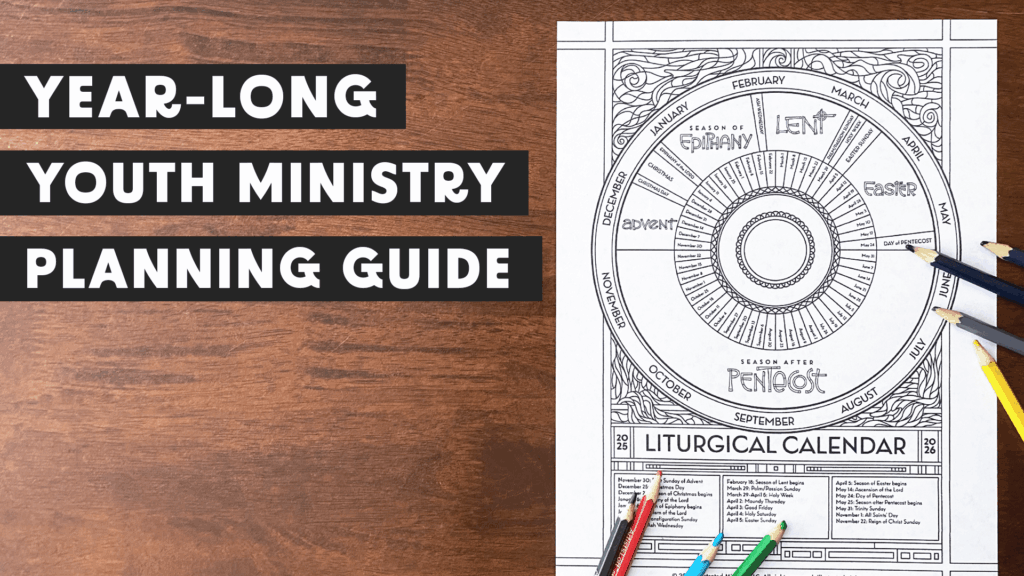
Why Plan Youth Ministry Around the Church Calendar?
For starters, the Church has a calendar of its own. The Christian calendar year begins with Advent and ends with Christ the King Sunday. In between there’s Christmas, Epiphany, Ordinary Time, Lent (including Holy Week), Easter (including Pentecost), and some more Ordinary Time. These seasons come with scripture-based themes and colors!
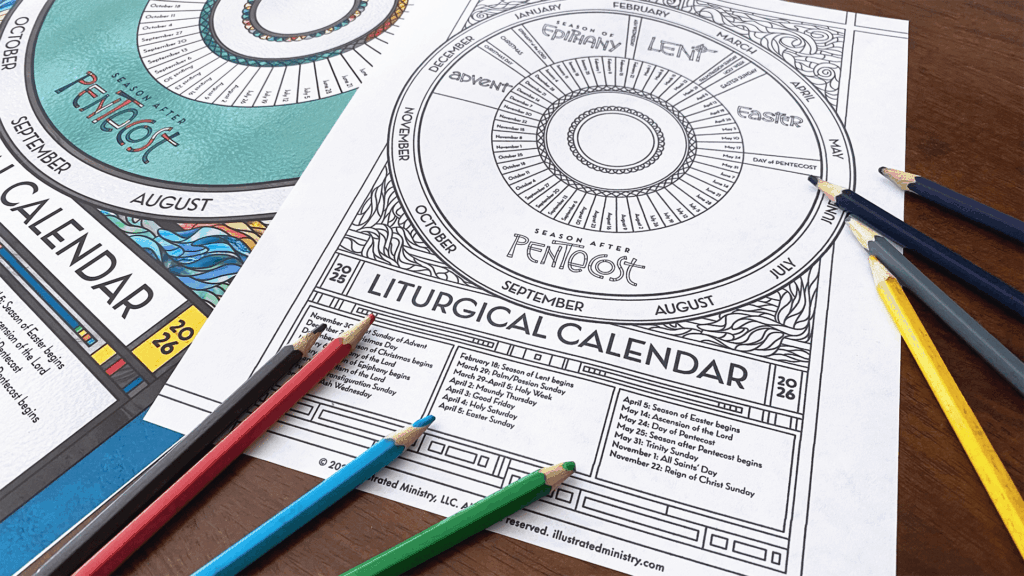
The current liturgical year ends on November 23rd, and the next one begins on November 30. Most denominations widely distribute calendars that follow the liturgical seasons and expand on them. If you want something visually engaging for your youth space, check out Illustrated Ministry’s Liturgical Calendar Poster, Coloring Page Poster, or Liturgical Calendar Sticker
Spiritual Practices for Ministry Planning
Time is one of God’s greatest gifts to us. Calendaring is one way we steward that gift. Why not infuse the process with devotion? After all, when it comes to ministry planning, spirituality is the point! Here are some suggestions:
- Ask for God’s wisdom to infuse the process.
- Take a day-long retreat to focus on calendaring.
- Take pictures of your youth and create a vision board for the year ahead.
- Light candles and say the names of the kids in your youth group aloud, praying for each one.
Choose whatever works for you!
Honoring the Essentials of Your Church’s Life
What rituals do people know and love in your church? Get those dates on the calendar right away. The All Saints altar is a significant part of my church’s tradition. For yours, it may be a sunrise hike on Easter morning or an annual service trip. Getting those dates nailed down enables you to communicate clearly and consistently with families, which impacts the culture and levels of participation. Don’t forget to include dates like birthdays, anniversaries, and graduation dates on your calendar as well.

Learn From the Past Year in Youth Ministry
Spend some time reflecting, then integrate what emerges into your plans for the year ahead.
- What did you learn as a leader last year?
- What had significant meaning?
- When did you need more support?
Discern the Now: What Your Calendar Needs
Each new liturgical cycle is a return. We return to what our culture does every year, what our tradition offers annually, and what the Earth makes possible. As leaders guided by Jesus’ way, we get to decide what to follow and what to resist.
For instance, back-to-school season is a great opportunity to create traditions. Perhaps your church organizes a backpack drive every year for your neighborhood school, but this year, due to budget cuts, it opts to partner with other youth ministry leaders in the area and expand the scope of the event. Or maybe this Christmas, a church might decide, as people of faith and as a ministry, to boycott stores that aren’t protecting the climate.
Finally, God’s creation is marked by four seasons. Consider how you might ensure that your youth experience the seasons as formative for their faith. Leaf pile jumping in fall, snowball fights in winter, flower planting in spring, and lake swimming in summer—consider it devotion. Book it!

Sustainable Rhythms for Youth Leaders
Look at your own life to ensure church programming doesn’t conflict with personal routines, family needs, and overall well-being. Organizing big events three weekends in one month can easily lead to burnout and resentment. You deserve the grace of sustainable pace as much as anyone else.
Leave Room for the Spirit
After mapping the year, discern your themes, locate resources, order them, and create a communications plan that aligns with your calendar. Using visual tools, like IM’s Liturgical Calendar resources, can help keep everyone on the same page—literally.
But before you start building it all out, do yourself a favor: review your sequence and ensure you’ve left room for surprise. Space that the Holy Spirit can fill with Her whimsy is a good thing in a culture of 24/7 grind and over-functioning.

Leave a Reply