
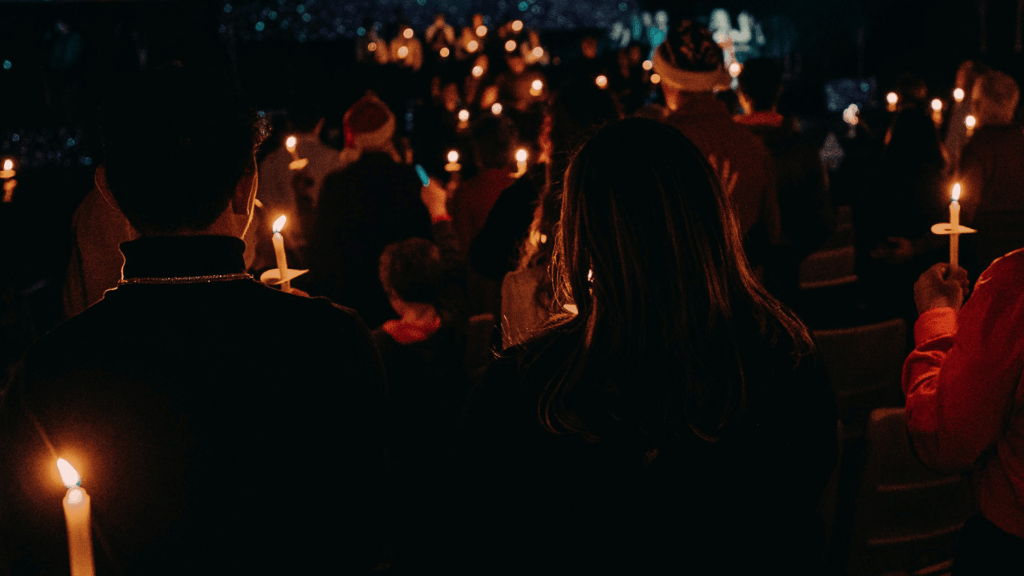
Christmas services are among the rare moments when a sanctuary can feel both timeless and tender. Candles flicker. Children wiggle. Families of all kinds gather in pews. And every year, for so many reasons, people walk through church doors carrying hopes, questions, grief, and longing.

In a social and political climate where belonging feels fragile and welcome feels wary, churches have a unique opportunity to embody the radical hospitality of Jesus. So, how do we welcome visitors during a season of both joy and vulnerability?
1. Remember: Everyone Carries a Story
Within every body is more than we know:
- A newly single parent navigating a tender holiday
- A trans teen seeking spiritual and/or physical safety
- A grandparent aching for reconciliation
- A family recently displaced from a church that no longer felt like home
- A person grieving a loss that feels sharper in December
When we greet others with warmth and without assumptions, we make space for these stories to breathe.
2. Make Your Welcome Explicit, Not Implied
The phrase “all are welcome” has become too vague to be trusted in church settings. Visitors want a clear, explicit welcome that communicates safety.
Try this: Enter your church building as if you’ve never been there before.
Pretend you don’t know which door to use, where bathrooms are, how the service begins, or if kids stay in worship. Notice everything through the lens of a first-time visitor:
- Is it clear where to go?
- Does your signage make sense?
- Do people greet you kindly without overwhelming you?

Even better—invite church members of all ages, stages, and experiences of life to do this exercise with you.
- Are all-gender bathrooms available and easily accessible?
- Can strollers and wheelchairs easily navigate inside and outside your building?
- Does your liturgy (and the people who lead it) reflect the expansive, welcoming love of God?
This simple exercise can reveal gaps longtime members overlook and help create a more accessible, hospitable space.
3. Connect the Christmas Story to the World We’re Living In
Jesus is born into political tension, displacement, and uncertainty—much like our world today.
When we gather during Advent and Christmas, we can acknowledge:
- Longing for peace in a violent world
- The rising fear many feel because of discriminatory legislation
- Hunger for hope amid climate anxiety, economic strain, and social division
- The grief and uncertainty families carry into the holidays
The good news of God’s love becomes more alive when we name the real world into which Christ is born again and again.
4. Offer Spaciousness, Not Pressure
Spaciousness in Worship
Many visitors have complicated relationships with church, so the spaciousness we create through our words and actions matters more than we may realize.
A generous welcome can sound like:
- “Participate however feels right.”
- “There’s space to step out if you need a break.”
- “Whether this is your first time or your first time in a long time, you belong here.”
And a generous welcome can look like:
- Softer lights during transitions to reduce sensory overload
- Clear signage for bathrooms, quiet rooms, nursing rooms, and accessibility routes
- Letting people know they do not need to stand, kneel, or sing unless it feels right
Spaciousness Through Safety
Creating spaciousness also means tending to the emotional and physical safety people need to relax and participate. For some congregations, this includes a plan for responding if law enforcement or ICE agents enter or approach the building. For others, it means establishing clear, trauma-informed protocols for responding to potential threats or gun violence.
Preparing these plans in advance and ensuring leaders and volunteers know their role creates space for congregants carrying fear or trauma to worship without added anxiety. It shows that your welcome extends not only to people’s spiritual experiences, but also to their safety, dignity, and humanity.
Check out these resources and stories for a good place to start:
- ACLU: The Chicago Pastor Protecting Her Community Against ICE (video)
- ACLU: Immigration Enforcement Guidance for Places of Worship
- UCC: Immigration Enforcement Action: What Churches Need to Know
- FEMA: Guide for Developing High-Quality Emergency Operations Plans for Houses of Worship
- UMC: Creating a Church Safety Plan
- UCC: Preparedness Resources
5. Provide Meaningful Ways to Engage—Especially for Children


Simple, ready-to-use tools and activities can help families feel included and at ease. Shameless plug: We have so many great resources for this!
- Illustrated Christmas Children’s Worship Bulletin
- Storytelling with Shapes: Christmas
- Christmas Coloring Pages
But it can also be as simple as creating a sensory-friendly wiggle space or inviting kids to participate in the liturgy.
Not sure what to do? Ask the kids in your community!
These small gestures communicate that children are celebrated and belong in your community as full participants.
6. Follow Up With Kindness, Not Pressure
If visitors share their contact information, follow up with a note that is:
- Brief, warm, and non-anxious
- Sent within 48–72 hours
- Free of assumptions about belief or future attendance
And always get consent before adding anyone to ongoing lists.

7. Let Your Hospitality Reflect the Expansive Love of God
At the heart of Christmas is a God who shows up with tenderness, courage, and radical belonging. Our welcome is one way we embody that truth.
Ask yourself and your leadership team: If you took away your rainbow flags and theological signage, how would someone know and experience the expansive love of God?
If we take the incarnation seriously, then our welcome cannot be theoretical or surface-level. It must be embodied in our signage, language, leadership, liturgy, accessibility practices, and care for one another.

This Christmas, may every person who enters your space encounter a community shaped by justice, tenderness, and courage—one that reflects the expansive love of God not only in what we do, but in how we show up.
Whether someone arrives confident, curious, tender, skeptical, grieving, exhausted, or full of joy, your community has the chance to offer what so many are longing for: a place where their story is honored, their humanity is seen, and their belonging is real.
Jeanine Robertson says
We looked for a progressive church in Benicia, CA. Attended Christmas Eve services two years in a row. It was a small enough church that it was obvious we were new. Not one person said hi, including the pastor. We haven’t been back. They needed to read what you’ve published!