
Choosing a storybook Bible can feel surprisingly overwhelming. There are so many options! There are beautiful ones, theologically rich ones, quirky ones, and everything in between. And if you’re anything like me, when you open one of the many published storybook Bibles, you immediately start noticing things: the language for God, the illustrations, which stories are included, and which ones are left out.
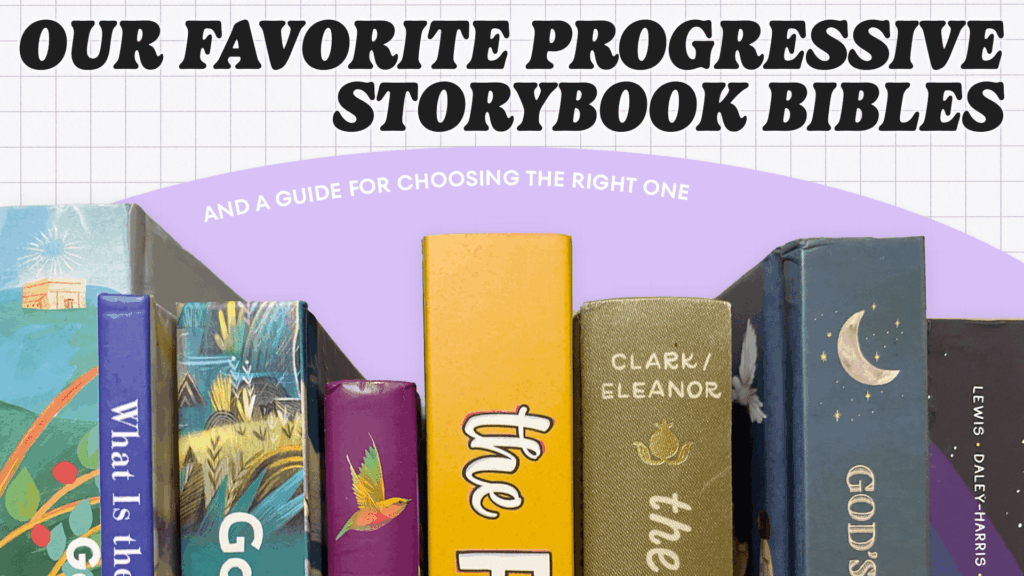
So before I even begin perusing the physical (or digital) shelf, I check in with myself: What do I need, and what do I value? Naming these things at the start, and paying attention to them throughout, makes the entire process clearer, gentler, and far less intimidating.
Why Storybook Bibles Matter
Storybook Bibles matter because they shape a child’s earliest imagination about God, belonging, and the world. Children absorb tone, imagery, and patterns long before they’re ready for complex theology or biblical criticism.
If you’d like to explore more about how kids learn from scripture, we wrote about that in Reading the Bible with Kids.
So the storybooks we read with them matter. The worlds these Bibles build through their pictures and words help lay the very foundation that their lifetime of spiritual experiences will be built upon.
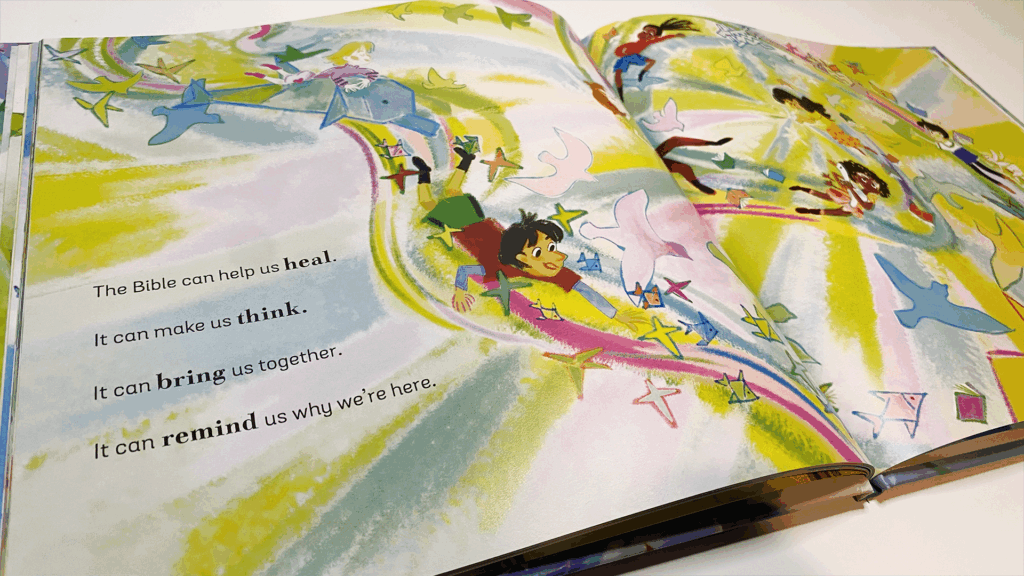
I’m reminded of how Rachel Held Evans and Matthew Paul Turner describe the purpose of the Bible in What Is the Bible?:
“The Bible can help us heal. It can make us think. It can bring us together. It can remind us why we’re here. It can show us the way home.”
This is what God’s library of stories has always been meant to do—whether told by a campfire, typed in a leather-bound book, or read together at bedtime.
And much like picture books, storybook Bibles invite readers of all ages into wonder. We explore that more in Picture Books Aren’t Just for Kids.
My Approach as a Pastor, Parent, and IM Team Member
When I evaluate a storybook Bible, I’m experiencing it through three different lenses.
As a pastor, I care about how faithfully the storytelling (and story selection) reflects the heart of scripture. Whose stories are told? Does it nurture wonder, compassion, justice, and belonging?
As a parent, I notice practicality. Is the language accessible? Do the illustrations invite curiosity? Will it work for bedtime, quiet reading, or for a child who wiggles, asks big questions, or wants to linger on the pictures?
As a member of the Illustrated Ministry team, I’m always looking for resources that are theologically responsible, artistically engaging, and developmentally appropriate.
Each lens helps me notice something slightly different, and when they come together, they help me choose with greater depth and awareness.

Before We Start
Take a moment to reflect:
What matters most to you as you read scripture with kids?
What kind of tone or imagery helps them feel connected?
Let these questions guide you as we explore.
For me, what matters most is choosing storybook Bibles that create connection—ones that nurture curiosity and belonging, offer engaging illustrations, and reflect God’s expansive love.
How to Evaluate a Storybook Bible

Once I have a better understanding of what I need and who I’ll be reading with, my storybook Bible evaluation process is actually quite simple and repetitive. Whether I’m wandering a bookstore, searching library shelves, or previewing pages online, here’s what I pay attention to.
I start with a quick flip-through.
My first impressions almost always tell me something important. I look at the illustrations, the colors, the tone/size/density of the text. Does it feel gentle? Imaginative? Too busy? Too bland? I ask myself, Would this hold my child’s attention? Would it hold mine?
Then I look at the table of contents.
This might seem small or insignificant, but a table of contents (or lack thereof) reveals a lot about who created the book and why. I notice which stories are told—and which ones aren’t. Is there a balance between the Old and New Testaments, and the many literary genres represented in each? I also pay attention to how the stories are organized and how long they are. Reviewing the table of contents gives me a snapshot of the book’s theology before I’ve read a single word.
Next, I read a few stories.
I try a familiar one and a more theologically “heavy” or tricky one. I’m looking for clarity, warmth, and whether the storytelling respects kids’ curiosity without oversimplifying or misrepresenting the biblical text.
Finally, I pay attention to God-language.
Pronouns, metaphors, and titles vary widely from book to book. I note what feels expansive, what feels limiting, and whether the language aligns with the values I named at the start.
And then I jot down some notes.
Nothing fancy—just a few pros and cons to help me remember what stood out. And if I really want structure? That’s when I pull out the worksheet.

Download Your Free Storybook Bible Review Worksheet
If you like spreadsheets and structure, or if you want a helpful way to keep track of the Bibles you’re comparing, we put together a free Storybook Bible Review Worksheet. It includes space for basic details, first impressions, story selection, God-language, theological notes, and anything else that stands out to you.
This is the tool I use when evaluating storybook bibles, and it works whether you’re a parent, pastor, grandparent, caregiver, volunteer, or children’s ministry leader.
Download it, print a few copies, and take them with you as you explore. Enter your first name and email below to download your freebie.
Affiliate Disclosure: Illustrated Ministry is an affiliate of bookshop.org. When you purchase a book through the links below, you support local bookstores and also help sustain the work we do here at IM. Thank you for helping us continue creating meaningful, inclusive resources for families and communities.
Best Progressive Storybook Bibles: My Top Recommendations
We made it! Now that you feel more equipped to evaluate storybook Bibles on your own, here are my top three storybook bible recommendations (in no particular order), plus an honorable mention.


The Peace Table
The Peace Table is a well-rounded, immersive, and deeply thoughtful storybook Bible with artwork from 30 global illustrators—each bringing a unique cultural and artistic lens. Its faithful retellings, diverse visuals of Jesus, and abundance of extras (peace practices, thematic paths, maps, prayers, background notes) make it ideal for family reading and Sunday school.
Best for: Sunday School, family reading, and when explored together with plenty of time to wonder aloud.


The Book of Belonging
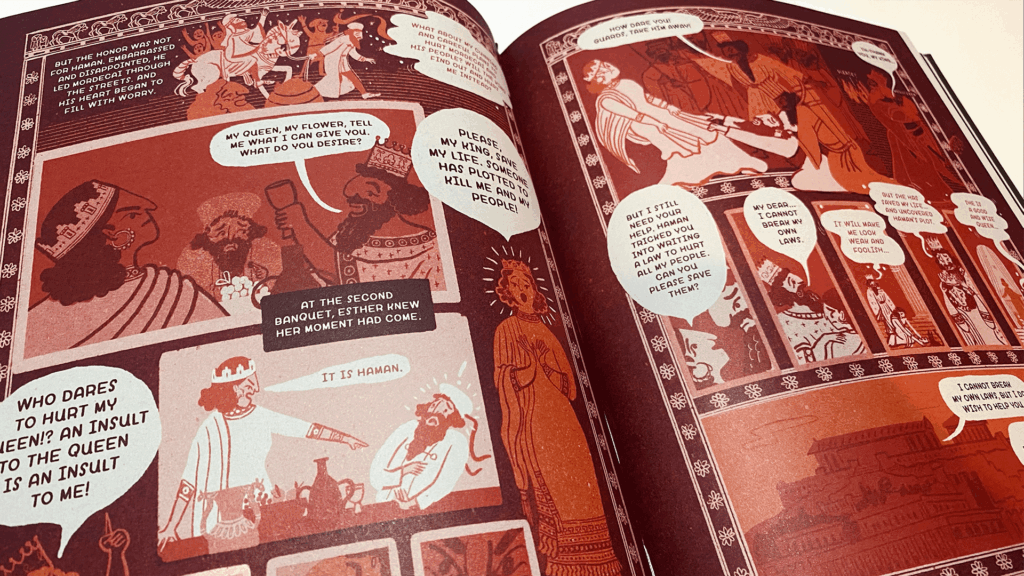
The Book of Belonging is warm, creative, and visually stunning! This storybook Bible uses varied layouts—full-page art, graphic-novel panels, and spacious spreads—to bring stories to life. Its reimagined narratives center belonging, highlight overlooked stories (especially women’s), and offer rich representation.
Best for: older elementary kids, independent readers, and cozy bedtime reading.


The Just Love Story Bible
The Just Love Story Bible is bold and justice-driven. This Bible features characters with a variety of brown skin tones—including Jesus—and uses storytelling that nurtures empathy, kindness, and community. Organized into eleven narrative sections, it balances big themes with clear, accessible language for younger readers.
Best for: justice-oriented families and Sunday school.

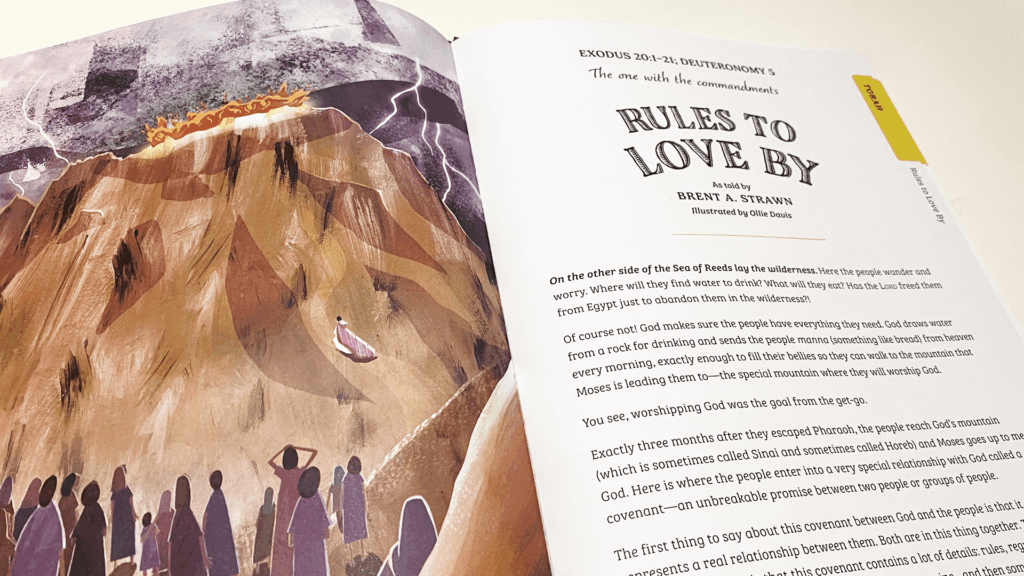
God’s Stories As Told By God’s Children (Honorable Mention)
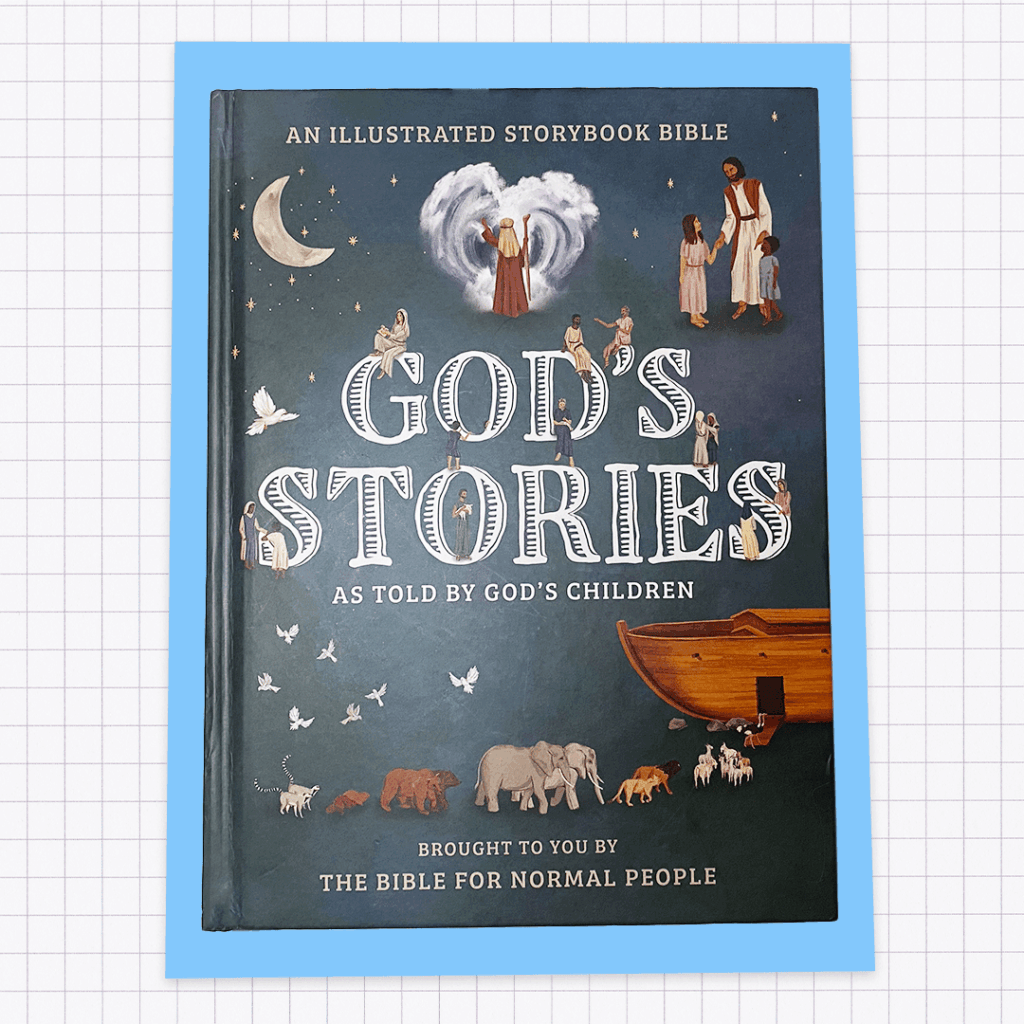
God’s Stories As Told By God’s Children is a quirky, anthology-style collection of Bible stories. It’s written by a wide range of biblical scholars and offers fresh perspectives and conversational storytelling. I was delighted to see an Apocrypha story included and QR codes for deeper engagement.
Best for: teens, curious independent readers, and adults revisiting scripture with new eyes.
A Final Encouragement
There is no perfect storybook Bible—only the one that fits your child or community, reflects your values, and helps you read scripture together with curiosity, joy, and wonder. Whichever book you choose, remember that relational connection is one of the most important parts of the experience.
Kids learn as much from the warmth of your presence and the conversations you share as they do from the stories themselves.
You’re already doing something beautiful by showing up with intention and care.

Additional Storybook Bible Reviews
If you’d like to explore even more options, we’ve also reviewed several other popular storybook Bibles:
Sharon Brenn says
We are Godparents for many children and the books would be a perfect gift for their families.