When the longest government shutdown in U.S. history disrupted services like SNAP and WIC, one Phoenix teen noticed something: families around her were struggling to access food, housing, and the support they relied on.
SNAP (Supplemental Nutrition Assistance Program) and WIC (Women, Infants, and Children) are programs that help low-income families afford food and essentials. SNAP provides food benefits to supplement grocery budgets, while WIC supports pregnant people and young children with access to nutritious food, baby formula, health services. When funding for these programs was paused, families suddenly had fewer options for food and essential health services. Many turned to food banks and other community resources, which were already stretched thin.
When Keliah saw this happening in her community, she decided to act.
Keliah is thoughtful, sharp, and deeply compassionate. And when she realized people were losing access to basic essentials, she got to work. What started as concern quickly turned into action, and soon Keliah had created a bilingual flyer, a thoughtfully researched guide to local food banks and housing programs.
Why Keliah Acted
When Keliah first heard about the funding cuts at a soccer game, she knew these changes could affect people she knew—and many more she didn’t. “I have a decent amount of resources,” she said, “just because of the circles I run in and the things I like to look at online.” Her heart was with those who didn’t have that same access. “I figured I could create a list and distribute it to as many people as I could.”
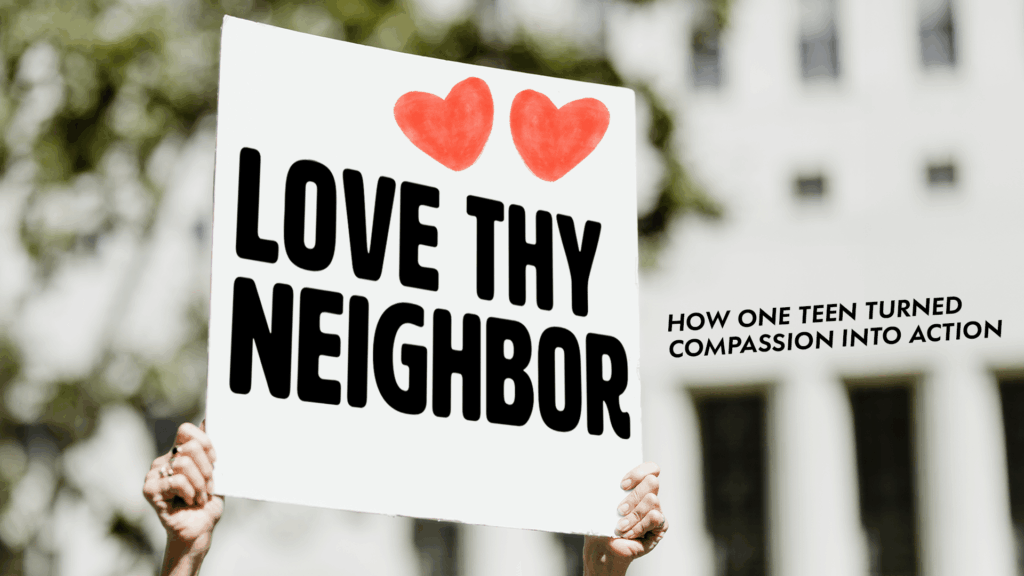
She was motivated not only by the depth of need but also by witnessing how her community members support one another. “I do think it’s our responsibility as Christians to help the people around us, to share what we have and do what we can,” she shared. “Part of loving thy neighbor means not letting them go without what they need.”

How She Built the Flyer
Keliah’s process was both strategic and compassionate. She looked for organizations that:
- Offered bilingual services
- Were independent of federal programs (in case government funding was cut)
- Accepted donations or volunteers
- Provided clear, accessible support
The flyer included:
- Logos for visual recognition
- Brief descriptions of services
- QR codes, links, and contact information
- A Spanish translation (thanks to a classmate!)
- A referral to Arizona’s resource line
Some of the organizations featured were St. Mary’s Food Bank, UMOM, Sojourner Center, and Agua Fria Food Bank—all trusted, local places serving those most in need.
Getting the Word Out
Though school policy made it tricky to hang the flyer in public spaces, Keliah found a way. She shared it with teachers who displayed it on their desks. She emailed it to friends, who would then pass it on. Her youth group posted it in their church building. What began as a single person’s effort quickly evolved into a collaborative community project.
Keliah has also noticed her community’s desire to help, too. Her neighbor started a front-yard food pantry, stocked by neighbors and spread through word of mouth. Keliah’s neighbor told Keliah and her mom that just being there and listening is part of what people need. People tell their stories while they pick up food and clothes. Sometimes, they just need someone to talk to.

Advice for Other Youth: Start Where You Are
Keliah wants other youth to know they don’t have to wait to make a difference. Her advice?
- “Look into what your state already offers.” Your community likely has resources—it’s just a matter of finding and sharing them.
- “Focus your energy.” You can’t fix everything (she credits Dr. Montgomery, a civil rights elder she met in Alabama, with this wisdom).
- “Involve your friends and community.” Ask others to join in. Many hands really do make light work.
- “Write your representatives.” Let them know people care and are watching. Share what your community needs.
For Youth Leaders: Questions to Ask and Conversations to Have
Keliah’s story reminds us that our youth notice what’s going on. They care deeply. And when trusted and supported, they lead with courage and compassion.
As you guide your youth, consider asking:
- What makes you frustrated? What do you care about deeply?
- Where do you see a need in your school or neighborhood?
- What brings you joy, and how do you care for yourself while doing hard things?
- How can we, as a youth group, support one another and our wider community?
Want to guide your youth group through the process of figuring out how they could turn their compassion into advocacy? Enter your name and email below to download a free youth group lesson!

Love in Action
Keliah’s story isn’t about solving everything. It’s about showing up with what you have, where you are, and offering it freely. It’s about turning compassion into something people can hold in their hands—a flyer, a connection, a hot meal.
As she says, “Part of loving thy neighbor means not letting them die when they don’t have the resources they need.”
And that kind of love? That’s holy work.
Leave a Reply