
Struggling with how the Bible has been used to harm instead of heal? You’re not alone. In his new book, Better Ways to Read the Bible, Pastor Zach Lambert dismantles four common lenses for reading the Bible that often lead to harm, offering instead four revolutionary lenses that help us read Scripture in ways that bring love, justice, and healing. We sat down with Zach to talk about the book and the hope it offers.
Free Book Giveaway
The giveaway is now over, but you can still download a free digital print by signing up below.

Q. We here at Illustrated Ministry feel that Better Ways to Read the Bible is the book so many have been looking for and haven’t been able to find. Zach, what inspired you to write this book?
A. You hit the nail on the head. I was inspired to write this book because I kept looking for a resource like it and couldn’t find anything. After I finish preaching or when someone reads a Substack article I’ve written, people often ask questions like, “That was such a healthier interpretation of those verses than I’ve ever heard before. How did you learn to understand the Bible this way?” Going to seminary or reading dozens of academic books just isn’t an option or interest for most people, so I needed a single resource to give out. Better Ways to Read the Bible was birthed out of that need.

Q. You are the Lead Pastor of Restore, a church in Austin, TX. Can you tell us a little about that community and how you implement the book’s practices in your own church?
A. I’m incredibly biased, but our community at Restore is simply the best. The Bible has always been the Church’s book. It belongs to the people and is best interpreted within a healthy and diverse community. That’s how I know the lenses I’ve written about promote healing rather than inflicting harm—not because a scholar said so or because I cracked some code, but because I’ve seen them bring healing, wholeness, and flourishing to our community at Restore for a decade. We implement these healthy lenses through sermons, small groups, kids’ ministry, and classes.
Q. In the book, you counter four historical ways to read the Bible with four new, refreshing approaches. Will you briefly explain those?
A. As a pastor for the last 17 years, I have seen the Bible weaponized to subjugate women, justify racism, bash LGBTQ+ people, cover up abuse, and silence those who speak out against injustice. In Better Ways to Read the Bible, I invite readers to a more Christlike interpretation of Scripture by dismantling four common lenses that lead to harm—Literalism, Apocalypse, Moralism, and Hierarchy—and replacing them with four lenses—Jesus, Context, Flourishing, and Fruitfulness—that promote healing and wholeness for all people. Here is a brief breakdown of the lenses:

Q. This is your first book, correct? How was the journey of writing a book for you?
A. Yes, it is, and it’s been quite the journey! Writing for sermons and school is really different from writing a book, but I still endeavored to stay true to my voice. The publishing process is also quite the whirlwind! Thankfully, I have an amazing agent (Jonathan Merritt) and a wonderful publisher (Brazos Press) who have walked with me through every step of the process.
Q. Will you tell us who you had in mind when writing this book? Who would benefit most from reading it?
A. I had so many dear friends and church members in mind when I wrote it. In fact, Better Ways to Read the Bible is filled with their stories. The book is for everyone who has ever grappled with their faith and wanted to read the Bible in healthier ways. It’s also for anyone who desires positive transformation for themselves and those they love. This is an excerpt from the final chapter:
You can be transformed. The people you love can be transformed. Your parent who has bought into the lie of religious hierarchy and spends their time supporting a version of Christianity consumed with power and domination can embrace the way of Jesus. Your child who has been so wounded by moralistic doctrine can heal from the damage of legalism. Your partner who has walked away from faith because they find literalistic interpretations of the creation story preposterous can find a faith that works with science instead of against it. Your friend who has fallen into conspiracy theories based on Left Behind theology can be set free.

Q. Aside from your book, what resources (blogs, books, videos, etc.) have been formative to you and your journey to teach others how to read the Bible? Are there any you’d specifically recommend?
A. I list a whole group of authors, activists, preachers, and leaders in the 1st chapter of the book who have been tremendously influential for me. If I had to narrow it down to a few resources, I’d highly recommend Searching for Sunday and Inspired by Rachel Held Evans, All About Love by bell hooks, everything ever written by James Cone, and all of Pete Enns’ books about the Bible.
Q. Thanks so much, Zach! If people want to learn more about you and follow the work you’re doing, where are the best places for people to find you online?
A. If you’d like more info about me and the book, go here. If you are able to preorder, please do so! Preorders are so important, especially for first-time authors like me.
The best place to connect is on Substack. We’ve developed a great community there. I’m also on Instagram, Twitter, Facebook, and basically every other social media site.
Thanks so much for having me!
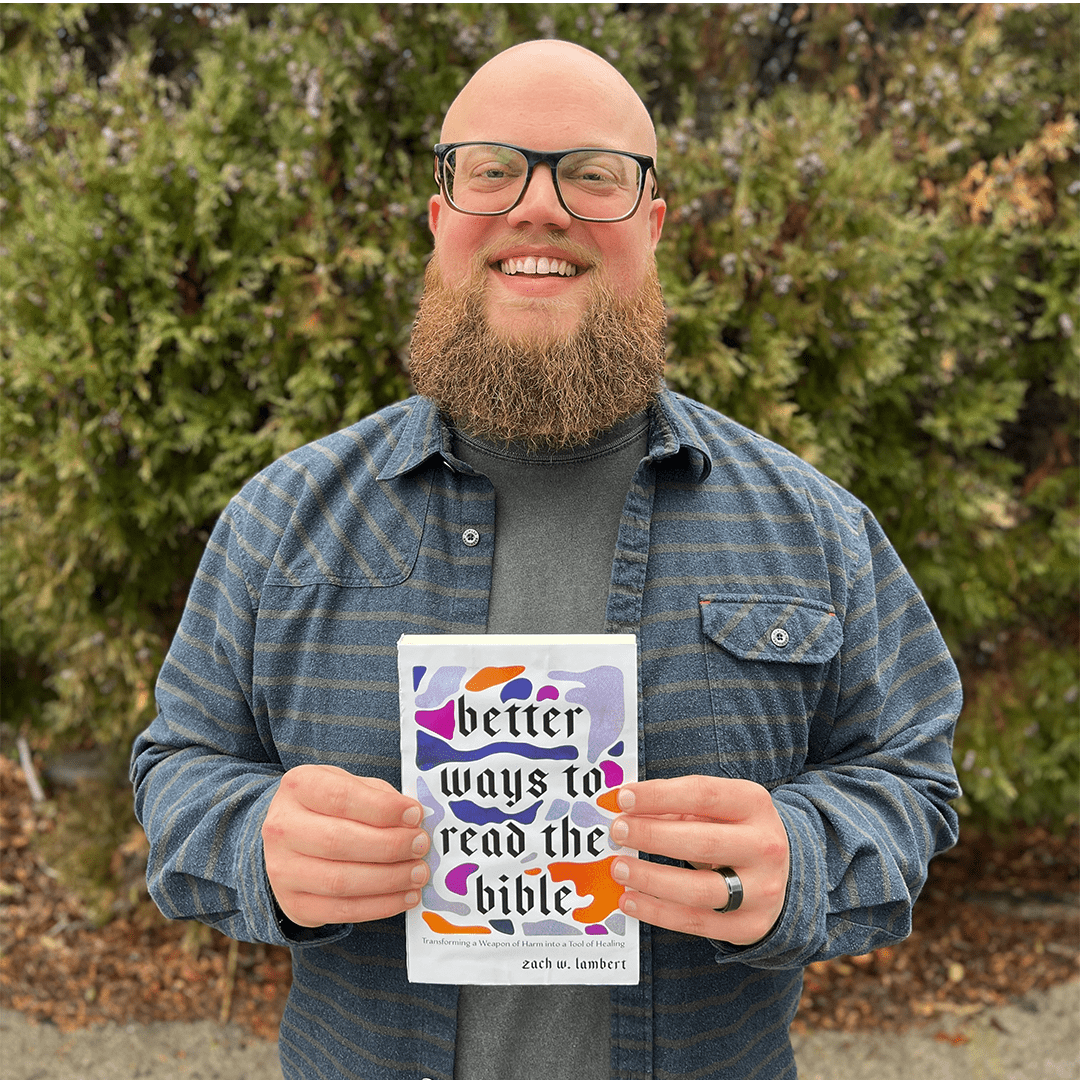
Zach W. Lambert
Zach is the cofounder of the Post-Evangelical Collective and serves on the boards of the Austin Church Planting Network and the Multi-Faith Neighbors Network. Zach and his wife, Amy, met each other in the sixth grade, fell in love at seventeen, and got married at twenty-one. They love watching live music, discovering local Mexican food places, and playing with their two boys.
Leave a Reply