
Self-expression through shapes, colors, and textures isn’t just for kids; it’s essential for everyone! Art stretches our imagination, and the creative process helps us grow in some pretty fabulous ways (read more about the developmental benefits of art from PBS Kids).
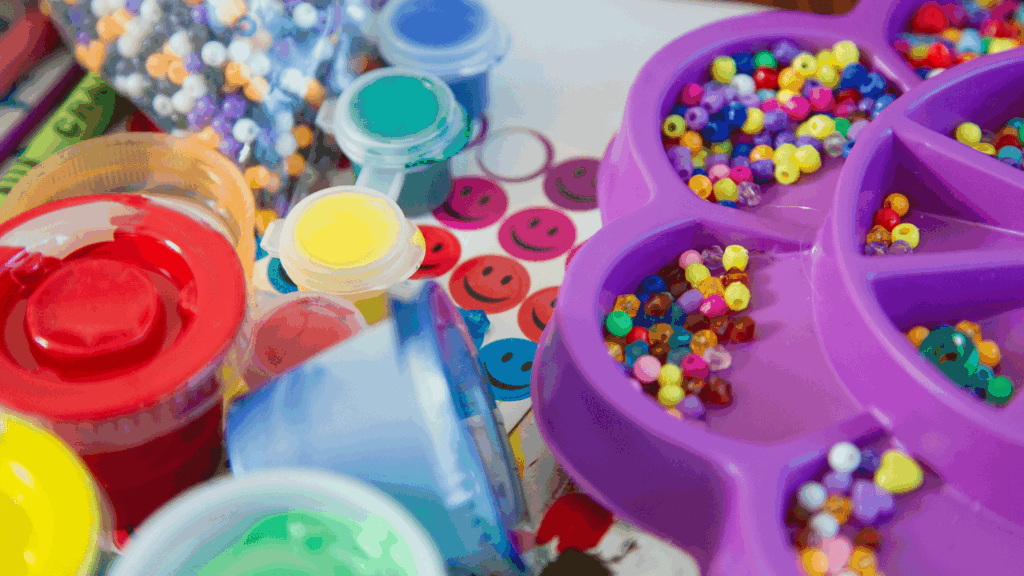
But here’s the thing: stocking up on supplies, especially on a budget, often means grabbing whatever is on sale or looks bright and fun. And while glitter and googly eyes are sparkly and adorable, most of these supplies are made of plastic, which is terrible for the more-than-human world (explore “The Plastic Tide” from NPR).
The good news? Balancing sustainability and creativity can be easier—and more cost-effective—than you might think.
Audit Your Craft Supplies for Sustainability
Look through your shelves, bins, and junk drawers of craft supplies and take note of everything made of plastic. Then ask:
- What can be used and reused over and over again?
- What can easily be swapped for a more sustainable option?
- What might need creative thinking to find an eco-friendly replacement?
- What is unavoidably plastic but could be phased out?
- What is unavoidably plastic and necessary?

Don’t forget: Be kind to yourself during your audit. You are one person, doing what you can in the face of a global plastic pollution crisis fueled by capitalism and consumerism. So take it slow; do one bin at a time. This isn’t about perfection; it’s about practicing a new way of doing things.
Easy Sustainable Crafting Solutions
Now that you’ve done your audit, it’s time to dive into sustainable swaps and solutions. You don’t need to reinvent your entire craft space, just make small, smart changes where you can. Here are some of the most common (and easiest!) ways to trade in waste for something more planet-friendly.

Dried out markers? Revive them.
Broken crayons? Donate to The Crayon Initiative or melt them into new crayons.
Plastic beads or jewels? Start phasing them out for wood or glass options.
Plastic tape? Try collage-paper tape.
Want more ideas? Check out our ever-growing Sustainable Crafting Pinterest board.
Reuse What You Already Have
Before you buy anything new, take another look at what’s already in your stash. Scraps, “mistakes,” and leftover bits from past projects can be hidden gems and might just spark the most creative ideas.

Paper scraps: Keep a bin for “mistakes” and leftover materials. Here’s some creative inspiration.
Fabric, felt, and yarn: Old clothes, linens, or even thrift store finds make great supplies.
Found materials: The Eric Carle Museum shares ideas for reusing materials and a thoughtful farewell to collecting plastic.
Learn About the Materials You Use
The more you know about your supplies, the easier it is to make sustainable choices. From understanding how materials break down to finding local recycling options, a little curiosity can go a long way toward reducing waste.

Check local recycling guidelines. Art supplies don’t always fit neatly into the bins.
Be curious about the life cycle of your materials. Books like Glitter Everywhere! are a fun, eye-opening place to start.
Look for eco-friendly swaps that fit your budget. Thrift stores, “Buy Nothing” groups, and community reuse centers are treasure troves for art supplies.
Start Small and Create with Care
Sustainable crafting isn’t about doing everything perfectly. It’s about making informed, compassionate choices one at a time. By reusing what you have, swapping when you can, and creating with care, you’re making art that’s beautiful for both people and the planet.

We’d love to hear from you: What are some of your favorite tips for sustainable crafting?
Leave a Reply